A banner slides in at the top of your screen, shows a message or a call, then disappears before you can finish reading it. That brief, slide-in alert is a floating notification — Android's "heads-up notification." It is the system's way of telling you something needs attention right now. This guide explains what a floating notification means in plain language: where it comes from, how it differs from a normal alert, and what you can do about it.
Floating notification meaning
In simple terms, a floating notification is a temporary banner that floats on top of whatever you are doing — at the top of the screen on phones, or as a small floating window on some tablets. Android officially calls it a heads-up notification. The word "floating" just describes how it appears to hover over your current app instead of sitting quietly in the notification shade.
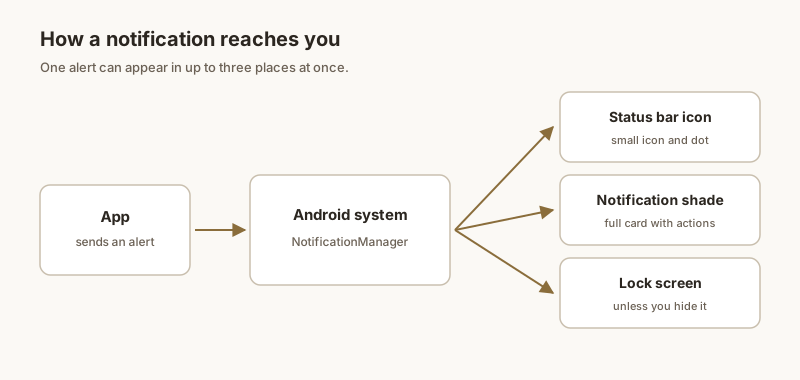
It is not a separate kind of message. It is the same notification you would normally see in your shade, just shown in a more urgent, on-top-of-everything format for a few seconds. So "floating notification meaning" and "heads-up notification" refer to the exact same thing.
How a floating notification appears
Android does not float every alert. A notification only appears as a heads-up banner when it is marked high importance (or belongs to a call or ongoing category). Examples:
- An incoming call.
- A turn-by-turn map direction.
- A security code (OTP) from your bank.
- Any app you set to "Urgent / Make sound and pop up."
Everything else — low-importance alerts, silenced apps, and most background updates — goes straight to the shade without floating. You decide which apps get to float by changing their notification importance or notification channel settings.
Floating banner vs chat bubble
People mix these up because both float on screen, but they are different:
- Floating (heads-up) banner: a short, auto-dismissing alert for any high-importance notification. Controlled by notification importance.
- Chat bubble: a persistent floating chat icon for one specific conversation (mostly messaging apps). Controlled separately under Settings → Notifications → Bubbles.
Turning off bubbles does not stop heads-up banners, and vice versa. If a chat keeps popping up as a bubble, disable bubbles for that conversation; if it pops up as a banner, lower that app's importance.
Why they vanish so fast
Heads-up banners are designed to be brief. They auto-dismiss after a few seconds, or the moment you tap or swipe anywhere. That is normal — the full notification then drops into your shade, where it stays until you clear it. The banner is just the "look at me now" moment; the actual message lives in the shade.
The frustration is that there is no built-in "show it, but don't grab my attention" middle ground for most apps: an app either shouts at you as a floating banner, or it goes fully silent. That is where a tool like Dingpin helps — you can let noisy apps stop floating, then pin the alerts you actually care about so they stay visible on your own schedule.
How to control them
Want them gone, or only for certain apps? The control lives in each app's notification settings:
- Open Settings → Notifications → App notifications.
- Tap the app you want to change.
- Find the relevant category / channel.
- Set its importance to Urgent / Make sound and pop up to enable floating, or Silent / Low to disable it.
For step-by-step, per-phone instructions, see our guides on turning floating notifications off and floating notifications on Samsung. To keep important alerts without the pop-ups, see how to silence notifications.
Official documentation
If you want to check anything against the source, these are the pages this guide is based on:
FAQ
What does a floating notification mean?
A floating notification is the temporary banner that slides in at the top of your screen for an important alert. Android calls it a "heads-up notification." It is the same notification you would see in your shade, just shown in a more urgent, on-top-of-everything format for a few seconds.
Are floating notifications the same as chat bubbles?
No. A floating banner is a brief alert for any high-importance notification. A chat bubble is a persistent floating icon for one conversation. They look similar but are controlled in different settings.
Why do floating notifications pop up over other apps?
Because the app's notification is set to high importance. Android shows high-importance alerts as heads-up banners that appear above your current app. Lower the app's importance and the banner stops covering your screen, while the alert still lands in your shade.
Can I turn off floating notifications?
Yes. Lower the app's notification importance (or turn off "Pop on screen") in Settings → Notifications → App notifications. The banner stops appearing, but the notification still arrives in your shade.